
Natchitoches Parish Criminal Court Records
Criminal court records in Natchitoches Parish are filed through the Natchitoches Parish Clerk of Court Criminal Department after the District Attorney files formal charges. The Criminal Department receives bills of information, indictments, pleadings, subpoenas, minutes, expungement filings, and other documents tied to felony and misdemeanor prosecutions. It is the court-record side of a criminal matter, not the jail roster. Jail custody, booking status, and daily roster data are handled by the sheriff and are covered through Natchitoches Parish inmate records.
The court split matters. The 10th Judicial District Court is the parish court of general jurisdiction and handles all felonies in Natchitoches Parish. The Clerk's criminal page states that misdemeanors in Ward 1 are City Court matters, while the district court handles felony filings parishwide. Natchitoches City Court hears local criminal, traffic, juvenile, and civil matters within its jurisdiction. For the charge document itself, see arrest records and court charges; for all civil, probate, recording, and criminal access channels, use court records.
The official Criminal Department page is the local source for criminal filings, copies, searches, and expungement fees.
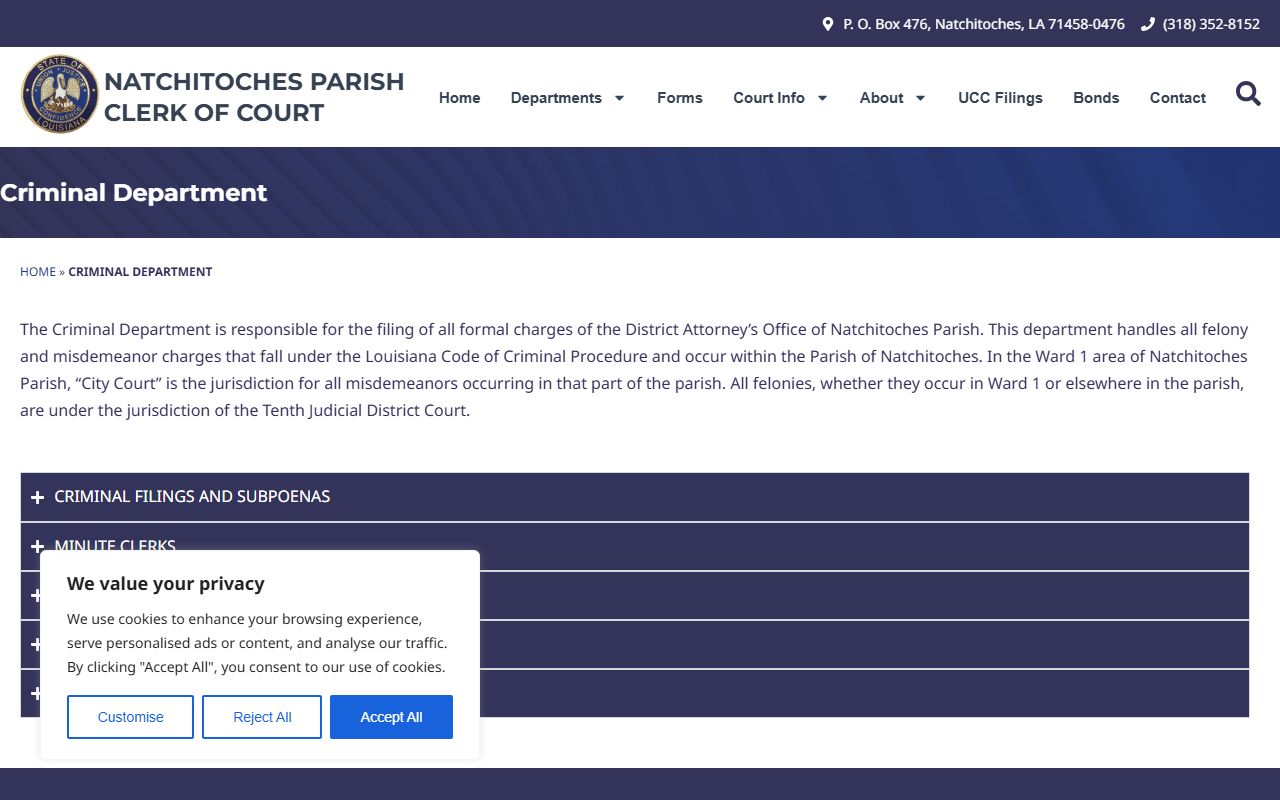
That source is important because it separates the Clerk's criminal case file from the sheriff's arrest paperwork and jail records.
Search Natchitoches Parish Criminal Records
Online criminal records are tied to the Clerk's record system. The Clerk's About page says criminal records run from January 1, 2007 in the online coverage set, and Clerk Connect lists Natchitoches Parish Clerk Online Inquiry as a participating service. The public landing page is limited, and the specific search fields are gated by the portal. When a public portal result is not enough, the Clerk's office remains the official record source.
- Start with Clerk Connect and choose the Natchitoches Parish Clerk Online Inquiry option if available to the account.
- Search by defendant name or docket number when the portal permits criminal inquiry.
- Check the case type and court level so a Ward 1 misdemeanor is not confused with a district felony file.
- Read minute entries, charge filings, and disposition language together instead of relying on the first charge line.
- Request a Clerk copy or certified copy when the record must be used for court, licensing, expungement, or another formal purpose.
Criminal searches by the Clerk cost $20 per name and include actual research. Criminal copies cost $1 per page, certified copies cost $5, extracts of minutes cost $10, and certified extracts of minutes cost $15. Those fees come from the official Criminal Department page. A full transcript is separate from the Clerk's minutes: the 10th JDC FAQ says transcripts are requested from the judge's court reporter and cost $2.50 per page with an estimated deposit upfront.
Natchitoches Parish Criminal Case Flow
A criminal court record is easiest to read as a sequence. Arrest paperwork may begin with the sheriff, police, or another agency, but the court case becomes a criminal case file after the District Attorney files formal charges. The Clerk then receives and files the criminal pleadings, issues subpoenas when requested by the DA or defense, maintains minutes, and keeps the case file as the matter moves through court.
Case flow: Charges Filed › Arraignment › Pretrial and Motions › Plea or Trial › Disposition › Sentencing
| Stage | What the Record May Show |
|---|---|
| Charges filed | Bill of information, indictment, citation, or other criminal filing from the DA. |
| Arraignment | Formal charge reading, counsel status, and plea entry such as guilty or not guilty. |
| Pretrial and motions | Motions, rules, subpoenas, exhibits, continuances, and minute entries. |
| Plea or trial | Plea agreement, trial setting, verdict, or dismissal activity. |
| Disposition and sentence | Final outcome, sentence, probation, fines, jail or prison terms, and post-judgment orders when filed. |
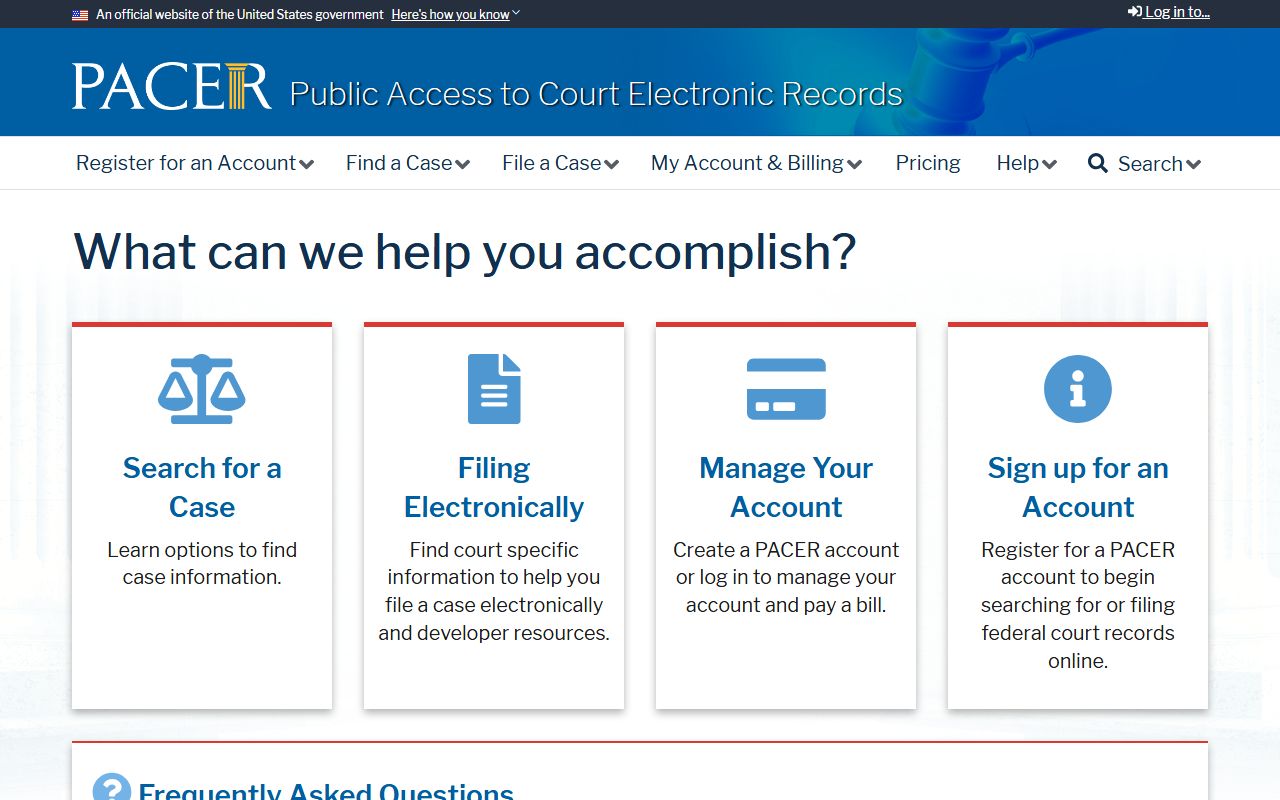
For federal criminal cases from Natchitoches Parish, the venue is not the parish district court. The U.S. District Court for the Western District of Louisiana handles federal matters, and federal docket access is through PACER.
The Western District source confirms the separate federal court system for Louisiana federal criminal records.
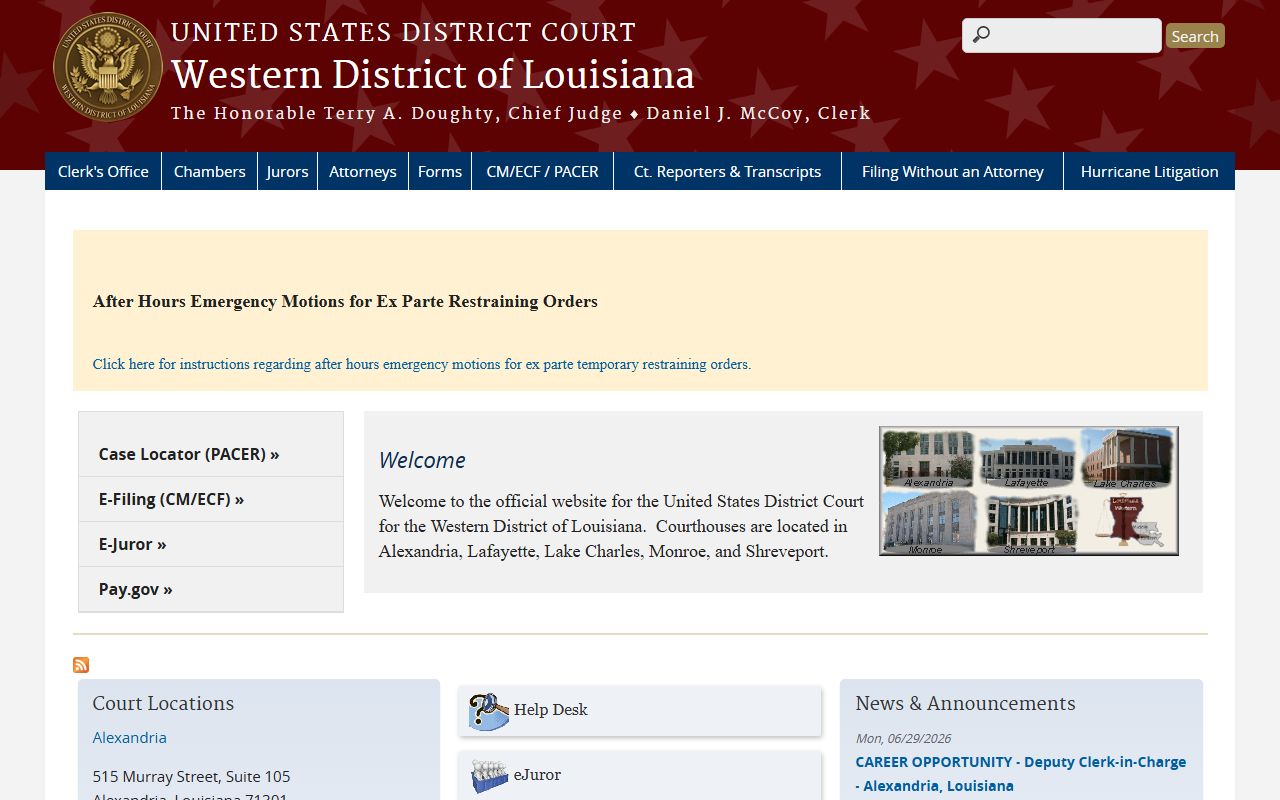
Use federal sources only when the charge was brought by the United States, not for ordinary parish prosecutions.
What Criminal Records Show
Local source material identifies the key criminal record parts: defendant names, docket numbers, formal charges, bills of information, indictments, pleadings, subpoenas, minute entries, evidence filings, extracts of minutes, and expungement filings. A criminal court record can also show whether a case was appealed, whether a transcript was requested, and whether a sentence or probation term was entered after conviction.
| Field | What It Shows |
|---|---|
| Docket number | The court case identifier used for Clerk research, copies, and expungement requests. |
| Defendant name | The person charged in the criminal court case. |
| Charging document | Bill of information, indictment, citation, or related filing. |
| Minutes | Summary entries kept by minute clerks when court is in session. |
| Disposition | Outcome such as guilty plea, dismissal, acquittal, or other case result. |
| Sentence | Punishment ordered after conviction, including jail, prison, probation, or other terms when entered. |
Note: Court minutes are summaries from the Clerk; a transcript is a word-for-word court reporter record and must be requested through the court reporter.
Charges and Convictions
A charge is an accusation placed into the court record. A conviction is an outcome after a guilty plea, verdict, or other legally recognized finding. Natchitoches Parish criminal court records may show charges that were amended, reduced, dismissed, or not proven. That is why the disposition and sentence fields matter as much as the first charge entry.
| Point | Charge | Conviction |
|---|---|---|
| Meaning | Formal accusation filed in court. | Final finding or plea that establishes guilt. |
| Where to check | Bill of information, indictment, or citation. | Disposition, minutes, judgment, and sentence. |
| Risk of misread | A listed charge may later be changed or dismissed. | A conviction should still be matched to the exact count and sentence. |
The Louisiana expungement statute explains that expungement removes eligible arrest or conviction records from public access but does not destroy them.
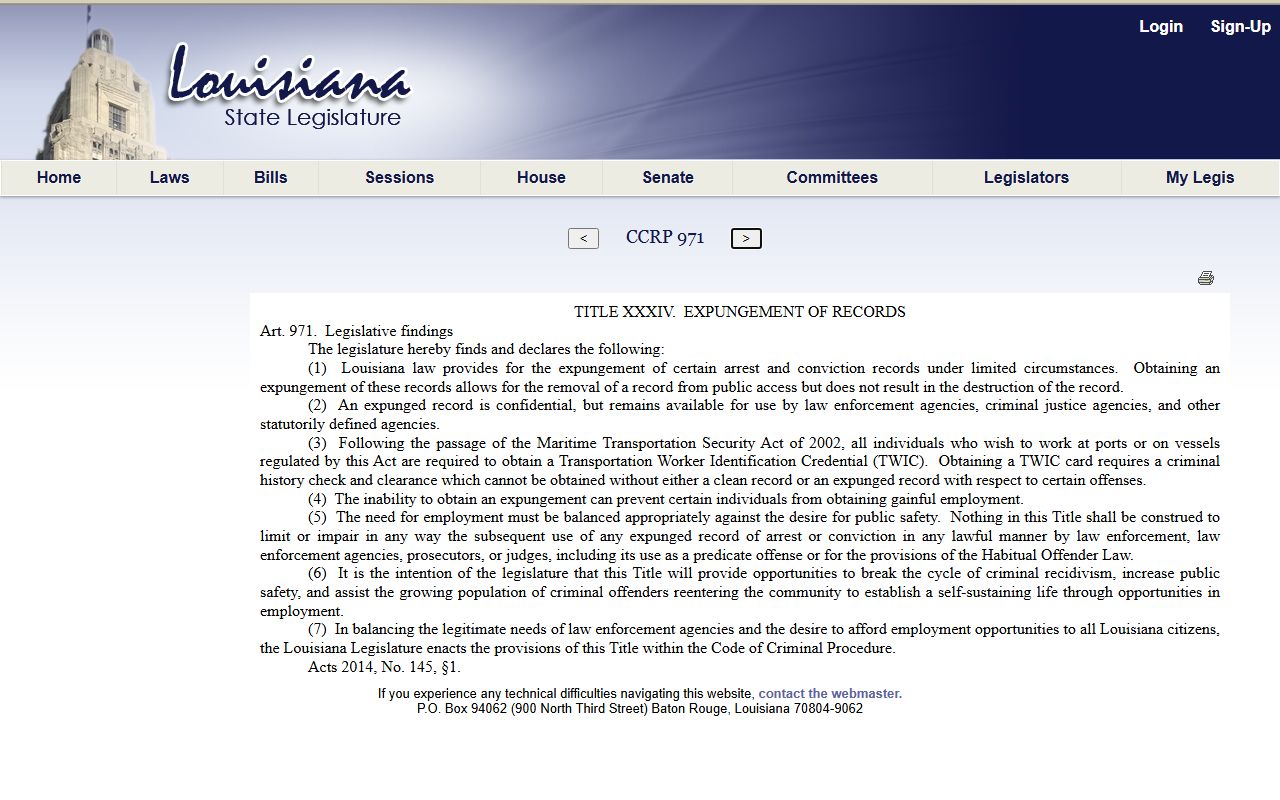
That distinction is central when an old charge no longer appears in public search but may still be available to criminal justice agencies.
Sealed and Expunged Records
Not every criminal court record is open for ordinary public inspection. Juvenile records are restricted by Louisiana Children's Code art. 412, and adoption records are confidential under the Clerk's Civil Department rules. Expunged criminal records are removed from public access under Louisiana criminal procedure, but they are not treated as physically destroyed.
| Record Type | Public View | Important Limit |
|---|---|---|
| Sealed | Hidden from ordinary inspection. | Access usually requires law, order, or authorized purpose. |
| Expunged | Removed from public access. | Law enforcement and defined agencies may still have access. |
| Juvenile | Generally confidential. | Disclosure depends on the Children's Code and court authorization. |
The juvenile-record statute is a direct restriction on public access for many youth matters.
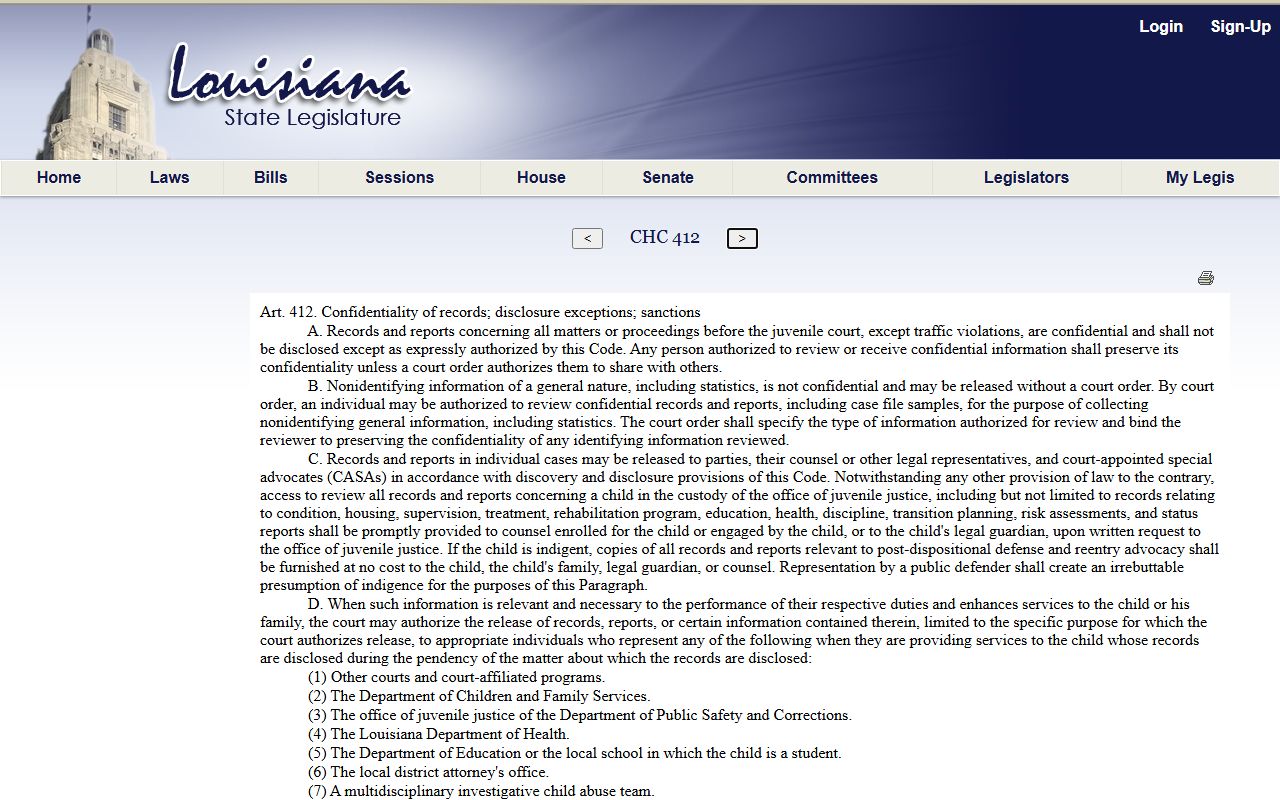
That is why City Court juvenile jurisdiction should not be described as an open criminal-record search source.
Public Access Rules
Louisiana public-records law supports inspection and copying unless an exception applies. La. R.S. 44:1 defines public records and public bodies, La. R.S. 44:31 gives adults the right to inspect, copy, or reproduce public records unless restricted, and La. R.S. 44:32 addresses custodian duties and copy access. In practice, criminal court files are requested from the Clerk, while arrest paperwork, warrants, bonds, reports, and jail records are sheriff records.
Official-copy point: The Clerk's Recording Department warns that online versions are not the official records for reliance; official public records are provided through the Clerk's office.
Federal criminal cases use a different path. PACER is the federal case-record system and does not replace the Natchitoches Parish Clerk for 10th JDC files.
Check the court name first so a federal prosecution is not searched as a parish criminal case.